
For many travelers, the Dominican Republic is synonymous with white-sand beaches, all-inclusive resorts and long days by the Caribbean Sea. Punta Cana has earned its reputation for good reason, but the country’s appeal extends far beyond its resort areas.
The Dominican Republic offers historic cities, mountain landscapes, fishing communities, tropical forests, waterfalls and beaches that feel very different from the large resort complexes. It is also a country where food, music and everyday life are an important part of the travel experience.
For travelers willing to venture beyond the resorts, the key is not necessarily to see everything. Instead, it is to combine a few different regions and allow enough time to experience them properly. A trip that includes the capital, a coastal destination and an inland or mountain area can offer a much broader picture of the country.
Start in Santo Domingo for History and Culture
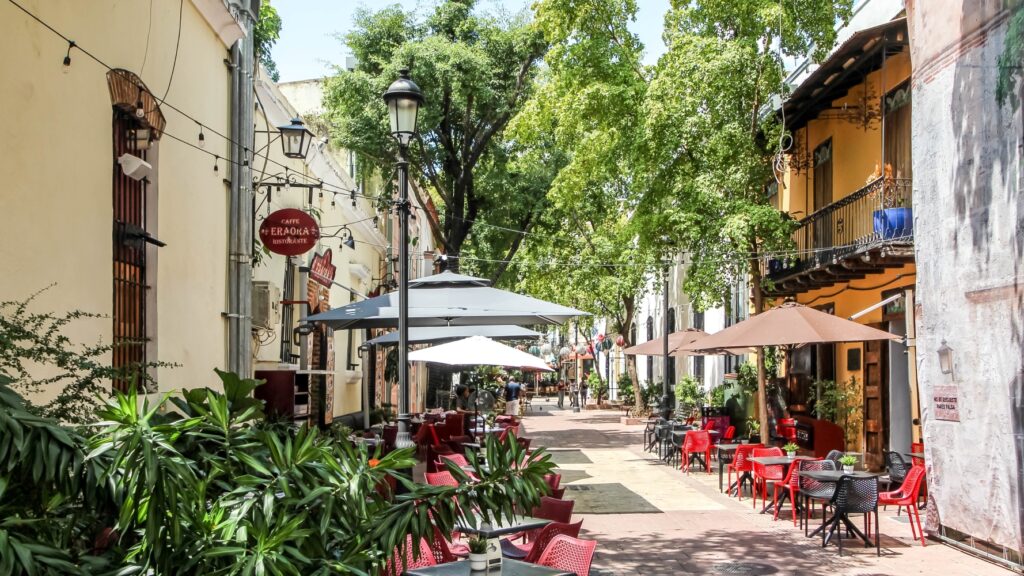
Santo Domingo is one of the best places to begin a trip because it provides a completely different introduction to the Dominican Republic from the traditional beach destinations.
Santo Domingo’s Colonial Zone (Zona Colonial) is a UNESCO World Heritage Site and contains some of the most important historic buildings in the Americas. Founded in 1498, the city became an important center of Spain’s presence in the New World and developed around a distinctive grid of streets.
The historic district is compact enough to explore largely on foot. Visitors can walk around Parque Colón, Calle Las Damas and the surrounding streets, while visiting landmarks such as the Catedral Primada de América and the Alcázar de Colón. The area is particularly enjoyable in the morning or late afternoon, when travelers can combine sightseeing with a stop at one of the neighborhood’s cafés or restaurants.
But Santo Domingo is more than its historic district. Museums, restaurants, cafés, contemporary art spaces and neighborhoods outside the Colonial Zone offer a glimpse of the country’s modern urban culture and provide a useful contrast to the colonial architecture of the old city.
For first-time visitors, spending two or three nights in the capital can provide a valuable cultural counterpoint to time spent on the coast. It also gives travelers the opportunity to experience the Dominican Republic as a living city rather than simply as a beach destination.
Head to Samaná for Nature and Beaches
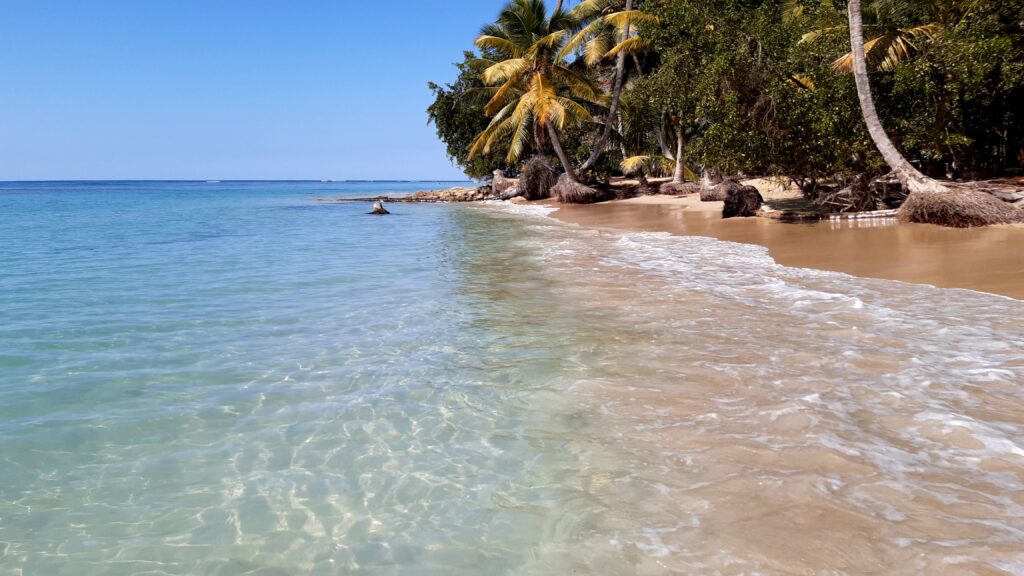
If the Dominican Republic is mostly associated with resort beaches, Samaná offers a very different version of the country’s Caribbean landscape.
The Samaná Peninsula combines mountains, rainforest, beaches and small coastal communities. Las Terrenas is a convenient base for travelers looking for a mixture of beaches, restaurants and a lively but relatively relaxed atmosphere. Its location also makes it practical for exploring several attractions in the surrounding area. Las Galeras, farther east, is quieter and provides access to some of the peninsula’s most scenic coastal areas and beaches.
One of Samaná’s best-known natural attractions is El Limón Waterfall, which can be reached on foot or on horseback with local guides. The area around the waterfall illustrates why the peninsula is particularly attractive to travelers interested in nature rather than simply spending time on the beach.
Samaná Bay is also famous for its humpback whales. Whale-watching excursions generally operate from January through March, when the whales migrate to the warm waters of the bay to mate, give birth and raise their calves. For travelers visiting during this period, a whale-watching trip can be one of the most memorable experiences in the region.
Other possibilities include boat trips, snorkeling, kayaking and excursions to Los Haitises National Park, known for its distinctive limestone formations, mangroves and caves. Because some of these activities depend on weather and sea conditions, it is worth leaving some flexibility in the itinerary rather than planning every day around a single excursion.
Samaná deserves more than a rushed day trip. Allowing three to five days makes it easier to combine beaches, nature and local experiences without constantly being on the road.
Explore Puerto Plata and the North Coast
Puerto Plata is another strong option for travelers who want to combine beaches with history and outdoor activities.
The city has a distinctive historic center with colorful architecture, Parque Central and the Catedral San Felipe Apóstol. The Fortaleza San Felipe, a 16th-century fortress overlooking the Atlantic, provides another connection with the region’s colonial past.
One of the city’s most recognizable attractions is the cable car to Mount Isabel de Torres. The journey provides panoramic views over Puerto Plata and the surrounding coastline, while the summit offers a cooler, greener environment than the city below. On clear days, the elevated viewpoint provides a particularly good perspective of the relationship between the city, mountains and Atlantic coast.
The region also works well for more active travelers. The 27 Charcos de Damajagua, a series of waterfalls and natural pools in the hills near Puerto Plata, is one of the area’s best-known adventure attractions. Visitors should allow several hours for the experience and follow local guides and safety instructions, particularly when conditions are wet.
For travelers who want time at the beach, Playa Dorada is close to the city, while the wider north coast offers additional options. Cabarete, east of Puerto Plata, is particularly associated with wind- and water-based sports and has a more independent, active atmosphere than the large resort areas.
Puerto Plata is therefore a useful choice for travelers who want a destination where history, beaches, nature and adventure can all fit into a relatively short stay. It can also work well as a base for exploring other parts of the north coast without having to change accommodation every night.
Go Into the Mountains
The Dominican Republic is not just a coastal destination. Inland, the country’s mountainous terrain creates a striking contrast with its tropical beaches, offering cooler temperatures, pine forests, rivers and agricultural landscapes.
Jarabacoa, in the province of La Vega, is one of the country’s best-known mountain destinations. Its cooler climate, rivers, waterfalls and green landscapes make it popular with travelers interested in hiking and outdoor activities. The town is also a good base for exploring the surrounding countryside without having to commit to a long mountain expedition.
The area is particularly known for waterfalls such as Salto de Jimenoa and Salto Baiguate, as well as rafting and other river activities. Jarabacoa is also one of the gateways to the mountainous interior around Pico Duarte, the highest mountain in the Caribbean. Reaching the summit is a multi-day trekking experience that requires considerably more preparation than the shorter outdoor excursions around Jarabacoa, so travelers should plan accordingly and use experienced local guides.
A couple of nights in Jarabacoa can completely change the rhythm of a Dominican Republic itinerary. Instead of waking up beside the sea, travelers can spend the morning in the mountains, visit a waterfall in the afternoon and enjoy a cooler evening in town.
Constanza offers another option for those who want to experience the country’s highlands. Located at a much higher elevation, it is known for its cool temperatures, agricultural landscapes and mountain scenery. The area is an important agricultural region, with crops including vegetables, strawberries and flowers. Travelers should bring warmer clothing, particularly for evenings and early mornings.
These destinations are especially worthwhile for visitors who want to understand how geographically diverse the Dominican Republic really is. A trip that combines the coast with the country’s interior can feel like visiting two very different environments within the same country.
Make Time for Local Food and Everyday Life
Exploring beyond the resorts is not only about visiting different landscapes. It is also an opportunity to experience Dominican food and everyday life.
Traditional dishes worth looking for include la bandera, typically made with rice, red beans and meat; sancocho, a hearty stew often prepared for gatherings and special occasions; mangú, mashed green plantains usually served with onions and accompanied by ingredients such as eggs, cheese or salami; and fresh fish and seafood in coastal communities.
Travelers should not feel that every meal needs to take place in a hotel or international restaurant. Local restaurants, cafés and markets can provide a much better sense of regional cooking. In smaller towns, asking locals where they would eat is often a simple way to discover places that may not appear in international travel guides.
The same applies to everyday experiences. Sitting in a neighborhood café, visiting a local market or spending an evening listening to merengue or bachata can be just as memorable as visiting a major tourist attraction.
The best approach is to be curious without treating local communities as attractions. Respect for residents, businesses, traditions and private spaces goes a long way. Travelers who take the time to observe and interact respectfully will often gain a more meaningful understanding of the country than those who simply move from one tourist attraction to the next.
Practical Tips for Exploring Beyond the Resorts
Traveling independently in the Dominican Republic requires a little more planning than staying at an all-inclusive resort, but the extra effort can make it possible to experience a much broader side of the country.
First, don’t underestimate travel times. Distances that look manageable on a map can take considerably longer because of traffic, road conditions, mountainous terrain or stops along the way. When planning a multi-destination itinerary, it is usually better to allow more time than you think you will need rather than scheduling activities immediately after a long journey.
A rental car provides the greatest flexibility, particularly for travelers visiting several rural or mountainous areas. However, driving requires confidence and attention, especially outside major highways and cities. Travelers who prefer not to drive can use private transfers or long-distance bus services between major destinations and arrange local transportation once they arrive.
Visiting the Dominican Republic
For visitors staying in Santo Domingo, public transportation and ride-hailing services can also be useful for getting around the capital, while organized excursions may be the simplest option for certain attractions outside the main tourist areas.
It is also worth planning accommodation according to the experience you want. In Santo Domingo, staying near the Colonial Zone makes exploring the historic center easier. In Samaná, Las Terrenas and Las Galeras offer different atmospheres, while Jarabacoa and Constanza are better suited to travelers looking for mountain scenery and outdoor activities.
Weather should also influence your plans. The Dominican Republic is warm throughout much of the year, but conditions vary between regions, and rainfall can affect outdoor activities. A lightweight rain jacket, comfortable walking shoes, sunscreen and insect repellent are useful additions to almost any itinerary. Travelers heading into the mountains should also pack a warmer layer, particularly for destinations such as Constanza.
Most importantly, avoid trying to cover the entire country in a single trip. Choosing two or three regions will usually result in a much more enjoyable experience than spending every other day traveling between destinations.
A More Diverse Dominican Republic Itinerary
For a seven- to ten-day trip, travelers could begin with two nights in Santo Domingo, continue to Samaná for three nights and finish with several nights on the coast or in the mountains.
Another option would be to combine Santo Domingo, Puerto Plata and Jarabacoa, creating an itinerary focused more heavily on history, adventure and landscapes. This route also provides a good contrast between the capital, the Atlantic coast and the country’s mountainous interior.
Travelers who already plan to visit Punta Cana can also use it as one part of a broader journey rather than making it the entire trip. Adding Santo Domingo, Samaná, Bayahibe, Puerto Plata or an inland destination can transform a traditional beach vacation into a much more varied experience.
The important thing is to leave room for flexibility. Some of the most memorable moments may come from a roadside stop, a conversation with a local, an unexpected view or a meal in a small restaurant rather than from a perfectly scheduled excursion.
For travelers looking for current news, context and insight about the country before or during their trip, DominicanScope.com provides an independent English-language perspective on the Dominican Republic.
The Dominican Republic Beyond the Postcard
The country’s famous beaches are only one part of the story.
Santo Domingo provides history and urban culture. Samaná combines beaches with forests and wildlife. Puerto Plata brings together colonial heritage, mountains and the Atlantic coast. Jarabacoa and Constanza reveal a cooler, greener side of the country.
Seeing these places does require more planning than simply staying at a resort, but it also changes the nature of the trip. Instead of experiencing the Dominican Republic only as a beach destination, travelers get to see different landscapes, communities, flavors and ways of life.
For those willing to venture a little farther, that broader experience may be the most rewarding souvenir of all.
Related Articles
- Hidden Gems to Visit in the Dominican Republic
- Where to Find the Best Untouched Beaches in the Caribbean
- Cheapest Caribbean Islands to Visit in 2026 – 12 Affordable Tropical Getaways That Won’t Break the Bank
- Best Travel Insurance for Jamaica & the Caribbean, A Complete Guide for Smart Travelers (2026)
DominicanScope is an independent English-language publication covering the Dominican Republic, with a focus on travel, tourism, culture, business, and local stories. Its mission is to help international readers discover the country beyond the traditional tourist destinations through informative, accessible, and context-driven content.
Are you a traveler, blogger or writer with a story to share?
You can write for Travelazz to educate and inspire adventurous explorers worldwide.

2 Comments
Comments are closed