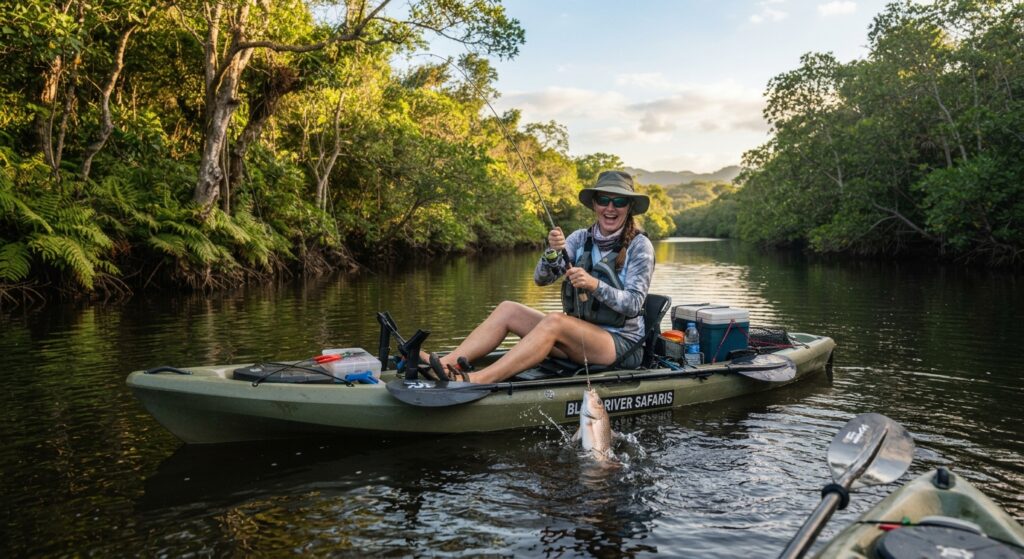
Most travelers meet Jamaica’s Black River from a pontoon boat on the famous safari tour. But if you fish, the river asks a different question: what would it be like to paddle it yourself, rod in hand, with nothing between you and the water but a kayak hull? The Black River is Jamaica’s longest navigable river, and its lower reaches run through the Great Morass, a Ramsar-listed wetland of mangroves, lagoons and quiet back channels. That combination of wild water, big fish and genuine remoteness makes it one of the most tempting DIY kayak fishing adventures in the Caribbean. I have spent years fishing from kayaks in the US, and when I started researching this trip, I learned the river rewards preparation and punishes assumptions. Here is the first-timer’s guide I wish I had at the start.
Know the water before you paddle it
The Black River looks black because of the dark riverbed: tannins from logwood trees and decomposing vegetation stain the bottom, while the water itself is remarkably clear. Near the mouth the water turns brackish, about 15 percent salt at high tide, and red mangroves rise along the banks in walls of interlocking roots. That brackish zone is a nursery for the whole food chain: snook, tarpon, snapper and jack all move through it, along with blue crabs and the freshwater shrimp locals have trapped for generations with bamboo pots.
Upriver the water runs fresh and the scenery changes to limestone banks and slower channels. This distinction matters more than anything else in this article, because the lower morass is home to American crocodiles. Estimates put a few hundred of them in the swamp, and they have been protected from hunting since the early 1970s. Kayaking the upper and middle freshwater stretches is the sensible first-timer plan. If you want to fish the brackish lower river, do it with a local guide who knows exactly where the crocodiles rest and feed. Never paddle it alone, and never fish the lower morass at dawn or dusk on your own.
What you can actually catch
The headliners are snook and tarpon. Tarpon here can run very large, and they are a prized catch-and-release gamefish, so plan to release anything you hook and ask your guide about current local regulations before you keep anything. Snook hunt the mangrove edges and current seams, and they hit with the kind of violence that makes a kayak spin in a circle. Snapper and jack round out the mix in the brackish reaches.
Match your expectations to the water. This is not a numbers fishery where you will boat fifty fish a day. It is a few-quality-chances fishery, where one rolling tarpon in a mangrove channel will be the story you tell for years. Pack patience alongside your tackle.
Gear that survives the trip
Brackish water is hard on equipment, and a kayak trip far from the launch means you fix problems on the water or not at all. A medium-heavy spinning setup is the most forgiving choice for a first-timer: it handles wind, casts the live-bait rigs and soft plastics you will use most, and it is easier to manage one-handed while you hold position with the paddle. If you prefer a baitcaster, spool it with fresh line before the trip and set the brakes a touch tighter than you would at home, because salt air and humidity change how line behaves. (If your casting has been sitting in a closet all winter, it is worth a refresher: I keep a simple line-spooling walkthrough at https://baitcastingreelz.com/how-to-spool-a-baitcaster-reel/ that covers the tension mistakes that cause most mid-trip tangles.)
Bring a small kit: extra leaders, a pair of pliers, a hook remover, and a towel or rag dedicated to wiping down the reel after every session. Freshwater rinse at the end of the day is not optional in brackish water. For lures, keep it simple: soft-plastic paddletails on jigheads, a couple of topwater walkers for low light, and spoons in silver and gold. Live shrimp, where you can buy them from locals, will outfish everything else.
How to fish it from a kayak
Stealth is the whole game. Mangrove fish spook at the slap of a paddle blade or the thump of a hull against a root. Anchor or stake out quietly along the mangrove edge and let the spot settle for ten minutes before your first cast. Work the shaded side of the roots first, then the current seams where channels narrow.
Position the kayak so you can fight a fish away from the roots, because a hooked snook will run straight for the thickest tangle it can find. Point your rod tip low and to the side to steer the fish, and keep your drag set before you ever make a cast. If a tarpon eats, remember the first jump happens fast: bow to the fish by dropping the rod tip toward it when it leaps, or the hook pulls. These are the same close-quarters boat-control habits that matter on any kayak trip, and a quick review of beginner casting and positioning fundamentals before you fly out will pay off more than any new lure.
Paddle the upper freshwater stretches in the morning when the wind is down, and plan to be off the lower river well before dark. Tell someone your float plan: put-in, take-out, and expected return time. This is standard kayak practice anywhere, and it matters more in a remote wetland.
Logistics: guides, timing and the town
Base yourself in or near the town of Black River in St. Elizabeth parish, on Jamaica’s quiet south coast. The famous Black River Safari has run pontoon tours up the river since 1987, and going on one before your kayak day is genuinely useful: you will see the channels, the wildlife, and the water conditions from a stable platform, and the guides know where the fish hold.
For the fishing itself, hire a local guide for at least your first day, even if you are an experienced kayaker. A good guide reads crocodile sign, knows which channels are fishable at which tide, and handles the practical side: launch spots, bait, and the informal permissions that keep things smooth. Book ahead rather than hoping to find someone at the dock.
The dry season, roughly December through April, gives you the most predictable weather and the clearest water. Bring sun protection, insect repellent and more drinking water than you think you need. Between sessions, do what the locals do: look for the roadside vendors in St. Elizabeth selling bags of peppered shrimp, a salty, spicy snack made from the same shrimp that fill the river’s traps.
A first-timer’s checklist
Pack the trip around five decisions: fish the upper freshwater stretches on your own and the lower brackish water only with a guide; bring a medium-heavy spinning setup with fresh line and a small repair kit; rinse everything after every session; learn the stealth and positioning habits before you go; and give the river a full day rather than squeezing it between resort activities. Done right, a morning on the Black River is not just a fishing trip. It is a paddle through one of the Caribbean’s great wild wetlands, with a rod in your hands and a real chance at the fish of a lifetime.
Recommended


Natalia is an angler with almost seven years on the water, most of it chasing bass from a kayak. She writes practical fishing guides for beginners at baitcastingreelz.com, where she covers everything from first casts to reel maintenance.
Are you a traveler, blogger or writer with a story to share?
You can write for Travelazz to educate and inspire adventurous explorers worldwide.

No Comments