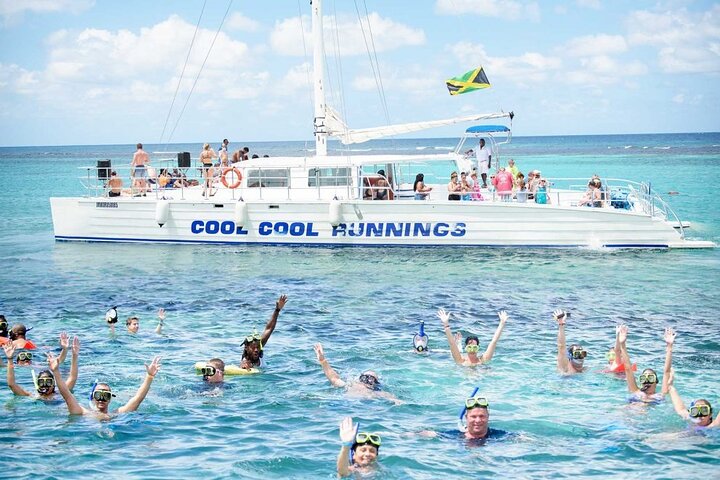
There is a version of Jamaica that exists beneath the surface.
Above the water, the island is famous for reggae, jerk chicken, waterfalls, rum, mountain roads and beaches that seem almost too beautiful to be real. But slip on a mask, put your face beneath the Caribbean Sea and a completely different Jamaica appears.
Schools of bright tropical fish move between coral formations. Parrotfish nibble at the reef. Sergeant majors flash silver and yellow in the sunlight. Sea fans sway with the current. In quieter waters, you might spot a stingray gliding across the sandy bottom or a sea turtle surfacing somewhere in the distance.
And the best part?
You do not need to be a scuba diver to experience it.
Jamaica has snorkeling opportunities for first-timers, families, solo travelers, backpackers and experienced ocean explorers. Some reefs can be reached from popular beaches, while others are best explored by boat. Some spots are surrounded by resorts and restaurants, while others feel wonderfully removed from the tourist trail.
The trick is knowing where to look.
From the protected waters of Montego Bay Marine Park to the laid-back reefs of Negril and the lush coastline around Port Antonio, here are some of the best places to go snorkeling in Jamaica, along with practical advice for making the most of your time in the water.
Why Jamaica Is Such a Great Snorkeling Destination
Jamaica is surrounded by warm Caribbean waters, and its coastline offers a surprising variety of underwater environments.
You will find coral reefs, seagrass beds, rocky coves, sandy bottoms, mangrove habitats and deeper offshore formations. These different environments create homes for an impressive range of marine life.
The experience also changes dramatically depending on which part of Jamaica you visit.
Montego Bay is convenient and well developed for snorkeling excursions. Negril combines easy beach access with beautiful western Caribbean scenery. Ocho Rios is ideal for travelers who want to combine snorkeling with waterfalls and other adventures. Port Antonio offers a greener, quieter and more secluded coastal experience.
That variety is one of Jamaica’s biggest advantages.
You can spend the morning swimming above a reef, eat jerk chicken for lunch, explore a waterfall in the afternoon and finish the day watching the sun disappear into the sea.
For travelers who prefer experiences over simply checking attractions off a list, snorkeling fits Jamaica perfectly.
1. Montego Bay Marine Park
If you are looking for one of the easiest places to begin snorkeling in Jamaica, start around Montego Bay.
The Montego Bay Marine Park protects an important section of the coastline and provides access to coral reefs and other marine habitats. Jamaica’s official tourism organization specifically highlights the marine park as a place to explore coral reefs filled with tropical fish.
The biggest advantage here is accessibility.
Montego Bay is home to Sangster International Airport, major hotels, restaurants, beaches and tour operators. That means you do not need to build your entire vacation around snorkeling.
You can simply add it to your Jamaica itinerary.
Boat excursions can take you farther offshore, while some areas near popular beaches provide easier opportunities for beginners.
The underwater scenery can include colorful reef fish, coral formations, sponges and other Caribbean marine life.
For a first snorkeling experience in Jamaica, Montego Bay is difficult to beat for convenience.
2. Doctor’s Cave Beach
Doctor’s Cave Beach is one of the most recognizable beaches in Montego Bay, and it is also one of the easiest places for travelers to combine a traditional beach day with snorkeling.
The water is famously clear, and the beach sits within the Montego Bay Marine Park.
This is particularly appealing for beginners because you can enjoy a relatively straightforward beach experience without having to arrange a complicated offshore expedition.
The reef areas around the beach can attract colorful tropical fish, while the surrounding water provides that classic Caribbean scene travelers come to Jamaica expecting.
There is also something psychologically comforting about snorkeling here if it is your first time.
You are not disappearing into some remote corner of the island. You are close to facilities, other swimmers and the lively atmosphere of Montego Bay.
That makes Doctor’s Cave a good option for solo travelers who want to explore the water while still being somewhere busy and accessible.
3. Secrets Reef, Montego Bay
Secrets Reef is another Montego Bay option worth considering, particularly if your priority is exploring underwater rather than simply spending time on the beach.
Visit Jamaica specifically identifies Secrets Reef and Doctor’s Cave Reef among Montego Bay’s notable snorkeling areas.
The advantage of reef excursions around Montego Bay is that boat operators can take you away from the busiest sections of the shoreline.
That can mean a completely different feeling.
The beach noise disappears. The boat engine slows. You jump into the water and suddenly your attention shifts entirely to what is beneath you.
For travelers who enjoy photography, this is also where carrying an underwater-capable camera can be worthwhile.
Just remember that coral reefs are living ecosystems, not underwater decorations. Keep your distance, avoid standing on coral and never remove marine life.
4. Negril’s Seven Mile Beach
Few places in Jamaica are as instantly recognizable as Seven Mile Beach in Negril.
The long sweep of white sand, turquoise water and relaxed atmosphere makes it one of the island’s classic destinations.
It is also a surprisingly good base for snorkeling.
The reef experience varies along the beach, and some of the better opportunities are toward the southern end and around the western cliff areas. Lonely Planet also highlights Seven Mile Beach for snorkeling, particularly around reef sections along the beach and near the cliffs.
The real attraction is the combination.
You can spend part of the day snorkeling, then walk along the beach, grab a cold drink, rent a kayak or simply lie beneath a palm tree.
Later, head toward the West End for one of Jamaica’s legendary sunsets.
For backpackers and younger travelers, Negril is particularly attractive because it combines beach life, nightlife, restaurants and water activities in one destination.
5. Bloody Bay
North of Seven Mile Beach lies Bloody Bay, a calmer and more sheltered part of the Negril coastline.
The name sounds dramatic, but the atmosphere is anything but.
Bloody Bay is known for its calm waters, resorts and offshore marine environments. Reefs in the area can be relatively accessible for travelers who are not experienced snorkelers.
This is the kind of place where you can ease into the experience.
You float.
You look down.
A fish appears.
Then another.
Five minutes later, you realize you have been staring underwater for half an hour.
That sense of discovery is what makes snorkeling so addictive.
6. Booby Cay
If you want your snorkeling day to feel more like a mini island adventure, consider Booby Cay.
The small island sits off Negril and can be reached by boat excursions.
The surrounding waters provide opportunities to see marine life, while the island itself adds another layer to the experience.
Rather than simply walking onto a beach and swimming for an hour, you are heading out across the Caribbean to a small piece of land surrounded by open water.
Boat trips to Booby Cay can also be combined with glass-bottom viewing and other activities.
It is an excellent option for travelers who want a more social snorkeling experience, especially if you are traveling solo and want to meet other people.
7. Ocho Rios Marine Park
Ocho Rios is often associated with Dunn’s River Falls, adventure tours and cruise ships, but there is another side to the destination beneath the water.
The Ocho Rios area has coral reefs and marine environments that can be explored through snorkeling and diving excursions.
It is particularly useful for travelers building an adventure-heavy Jamaica itinerary.
Imagine starting the day with snorkeling, eating lunch overlooking the sea and spending the afternoon hiking through tropical scenery.
That is the Ocho Rios advantage.
You are not limited to one type of experience.
8. Runaway Bay
Runaway Bay is one of the north coast’s more underrated bases for underwater exploration.
Located between Montego Bay and Ocho Rios, the area offers access to reefs and clear Caribbean waters.
For travelers who find the major resort destinations a little too busy, Runaway Bay can provide a more relaxed alternative.
The underwater landscape around the area includes coral formations and tropical fish, while boat excursions can take experienced snorkelers farther offshore.
It is also a useful stop if you are road-tripping along Jamaica’s north coast.
Rather than treating Jamaica as a collection of isolated resort towns, think of the coastline as one long adventure route.
Montego Bay.
Falmouth.
Runaway Bay.
Ocho Rios.
Oracabessa.
Port Antonio.
Each stop has a different personality.
9. Oracabessa Bay Fish Sanctuary
Oracabessa is one of the more interesting options for travelers who want their snorkeling experience to have a conservation story behind it.
The Oracabessa Bay Fish Sanctuary is connected with marine conservation and community-based tourism initiatives. Visit Jamaica highlights guided snorkeling, boat tours and other experiences in the sanctuary, where tourism helps support marine conservation and local community projects.
This is the kind of experience worth seeking out if you want to travel more consciously.
Instead of simply asking, “Where can I snorkel?”, ask another question:
“Where can my visit actually contribute to the place I am exploring?”
That small change in mindset can completely transform the way you travel.
10. Port Antonio and East Portland
Port Antonio is one of Jamaica’s most beautiful destinations for travelers who prefer the road less traveled.
The landscape becomes greener.
The coastline becomes more dramatic.
The pace slows down.
And the tourism infrastructure feels less concentrated than in Montego Bay or Negril.
Around East Portland, travelers can explore snorkeling, kayaking and other marine experiences connected to conservation efforts.
The Alligator Head Foundation operates within the East Portland Fish Sanctuary and works with marine conservation initiatives involving coral reefs, seagrass beds and mangroves.
For an adventure traveler, this is an exciting combination.
You are not simply snorkeling.
You are exploring one of Jamaica’s most ecologically fascinating regions while getting closer to communities that depend on the sea.
11. San San Beach
San San Beach is one of the beautiful coastal stops around Port Antonio.
The setting is dramatically different from the major resort beaches.
Instead of a huge strip of sand packed with hotels, you get a more intimate Jamaican landscape of lush vegetation, rocky coastline and clear water.
Snorkeling conditions can vary with weather and sea conditions, so do not arrive expecting every day to be identical.
That is part of the adventure.
Portland rewards travelers who remain flexible.
If the water is calm, snorkel.
If the sea is rough, explore inland.
If the sun is blazing, find a shady beach.
If rain rolls across the mountains, wait it out over lunch and watch the landscape turn impossibly green.
12. Frenchman’s Cove
Frenchman’s Cove is one of Jamaica’s most photogenic beaches.
A freshwater river flows toward the sea here, creating a unique meeting point between river and Caribbean water.
The setting is spectacular, but travelers should think of Frenchman’s Cove primarily as a scenic swimming and beach destination rather than assuming it will always provide the same snorkeling conditions as a dedicated reef site.
The magic is in the overall experience.
Swim.
Explore.
Relax beneath the trees.
Watch the river meet the sea.
Then continue exploring Portland.
This is especially good for travelers who become bored when every day of a vacation revolves around the same beach chair.
13. Bluefields Bay
If you want to get away from Jamaica’s major tourist centers, look toward the south coast.
Bluefields Bay offers a quieter coastal atmosphere and snorkeling opportunities that can fit naturally into a slower Jamaica itinerary.
The south coast feels different from Montego Bay and Negril.
There are fewer big resort concentrations.
Fishing communities become more visible.
Roadside restaurants and local businesses replace some of the heavily tourist-oriented infrastructure.
For independent travelers, that can be exactly the point.
You are not necessarily searching for the most polished experience.
You are searching for the experience that feels real.
14. Port Royal and Kingston
Kingston may not be the first place that comes to mind when you think about snorkeling in Jamaica, but the area has an interesting maritime history.
Port Royal was once one of the Caribbean’s most notorious and important ports before a devastating earthquake in 1692 caused much of the historic settlement to sink beneath the sea.
Today, the area offers travelers a chance to combine Jamaica’s history with marine exploration.
If you are interested in shipwrecks and underwater archaeology, this is a particularly fascinating direction to explore.
Just make sure any snorkeling or boat excursion you join operates legally and respects protected historical and marine sites.
15. Oyster Bay and the Portland Coast
The waters around Portland offer another reason to travel east.
This is where Jamaica feels less like a conventional Caribbean resort destination and more like a tropical expedition.
The coastline is lush.
The mountains are close.
The sea is intensely blue.
And small coves can feel surprisingly private.
Oyster Bay and nearby coastal areas can provide calm-water snorkeling opportunities when conditions cooperate.
For travelers with more time, Portland is arguably one of the best places to slow down and explore Jamaica beyond the standard tourist circuit.
What Marine Life Can You See While Snorkeling in Jamaica?
One of the great pleasures of snorkeling is that you never completely know what you are going to see.
That uncertainty is part of the experience.
Common sightings can include parrotfish, angelfish, butterflyfish, sergeant majors, blue tangs, wrasse, groupers, rays, sea urchins and a variety of smaller reef creatures.
Depending on the location and conditions, you may also encounter turtles, barracuda, moray eels, lobsters and nurse sharks.
But there is an important distinction between seeing wildlife and expecting wildlife.
The ocean is not a zoo.
A turtle does not owe you a photograph.
A ray does not have to appear because you booked a snorkeling excursion.
Some of the best snorkeling experiences happen when you stop chasing specific animals and start paying attention to the entire ecosystem.
Look closely at the coral.
Watch the smaller fish.
Notice how fish behave around rocks.
Look for movement in the sand.
You might discover something far more interesting than the animal you originally hoped to see.
When Is the Best Time to Go Snorkeling in Jamaica?
Jamaica can be enjoyed year-round, but snorkeling conditions depend heavily on the weather and sea state.
Clear, calm days are generally preferable.
Early mornings are often especially appealing because winds can increase later in the day, and getting into the water early can help you avoid some of the crowds at popular locations.
March through May can be particularly attractive for Montego Bay according to snorkeling guidance from local resort operators, although conditions vary from day to day.
The key is not to obsess over finding one perfect month.
Watch the weather.
Ask local operators about conditions.
If the sea is rough, do not force it simply because your itinerary says “snorkeling day.”
The ocean always gets the final vote.
How Much Does Snorkeling in Jamaica Cost?
The cost can vary considerably.
A beach with public access may cost little beyond transportation and any beach entry fee.
A guided boat excursion will cost more, particularly if equipment, transportation, drinks and multiple snorkeling locations are included.
Resort guests may also have access to complimentary snorkeling equipment or scheduled excursions, depending on the property.
For budget travelers, compare the total cost rather than looking only at the advertised tour price.
Ask whether transportation is included.
Ask whether masks and fins are included.
Ask how long you will actually spend in the water.
Ask how many people will be on the boat.
Ask whether there are additional park, beach or conservation fees.
A cheap tour that spends most of the afternoon transporting passengers may not be a bargain.
Budget Snorkeling Tips for Jamaica
You do not need an expensive vacation to enjoy Jamaica’s underwater world.
If you are traveling on a budget, consider staying somewhere with easy access to a beach rather than paying for an all-inclusive resort simply because it offers snorkeling.
Bring your own mask and snorkel if you plan to snorkel several times during your trip.
A basic personal set can save you from repeated rental fees and gives you the confidence of knowing your equipment fits.
Travel outside the busiest resort zones.
Ask locals or reputable accommodation hosts about public beach access.
Compare several boat operators before booking.
And consider combining snorkeling with free or low-cost activities such as swimming, hiking, exploring local communities and watching the sunset.
Jamaica becomes much more affordable when you stop trying to experience it entirely through organized tours.
Snorkeling as a Solo Traveler
Snorkeling is an excellent solo travel activity, but the ocean deserves more respect when you are alone.
Never assume calm-looking water is automatically safe.
Avoid swimming beyond your ability.
Do not snorkel alone in isolated areas where there is no easy way to get help.
If you are heading offshore, use a reputable operator and let someone know your plans.
A solo traveler should also think about belongings.
Leave expensive electronics and unnecessary valuables somewhere secure rather than leaving them unattended on a beach.
And if you are exploring independently, ask locals about currents, boat traffic and the safest entry points.
A five-minute conversation can provide information that no travel blog can replace.
Snorkeling Safety in Jamaica
The most important rule is simple:
Know your limits.
You do not need to be a strong swimmer to enjoy snorkeling, but you should be comfortable in the water.
Never stand on coral.
Never grab marine animals.
Never feed fish unless you are participating in a legitimate activity where feeding is explicitly managed for conservation or educational purposes.
Avoid touching coral even if it looks lifeless. Coral reefs are fragile living ecosystems, and careless contact can damage them.
Use reef-friendly sun protection where possible and consider wearing a rash guard to reduce the amount of sunscreen that washes into the water.
Stay aware of boats.
Do not snorkel in areas with heavy vessel traffic unless there is a designated snorkeling zone.
And if the water looks rough, listen to local advice.
There will always be another day to snorkel.
What to Pack for a Jamaica Snorkeling Adventure
Keep your snorkeling kit simple.
A properly fitting mask is arguably the most important item.
Add a comfortable snorkel, fins, swimwear, reef-conscious sun protection, a rash guard, waterproof phone protection and a lightweight towel.
A dry bag can be extremely useful for independent travelers.
If you plan to visit several beaches, carry water and a small amount of cash for local expenses.
For underwater photography, a waterproof action camera can be useful, but do not let photography distract you from the actual experience.
Some moments are better remembered than photographed.
The Best Jamaican Food to Eat After Snorkeling
Snorkeling works up an appetite.
Fortunately, Jamaica knows exactly what to do with hungry travelers.
Look for jerk chicken, jerk pork, escovitch fish, curry goat, rice and peas, festival, bammy and freshly prepared seafood.
Along coastal communities, grilled fish can be an especially satisfying post-snorkeling meal.
And if you are staying in Negril, Montego Bay, Ocho Rios or Port Antonio, do not limit yourself to restaurants inside major resorts.
Some of the best travel memories happen when you pull over somewhere that looks busy with locals and order what everyone else is eating.
Food is part of the adventure.
Jamaica After Dark
One of the reasons Jamaica works so well for adventure travelers is that the day does not necessarily end when the sun goes down.
Montego Bay has bars, restaurants and nightlife around the Hip Strip.
Negril is famous for its laid-back beach atmosphere and sunset culture.
Ocho Rios offers a mixture of restaurants, bars and resort entertainment.
Port Antonio is quieter, making it better suited to travelers who prefer intimate evenings and a slower pace.
If you spend the day snorkeling, resist the temptation to rush immediately back to your hotel.
Find somewhere near the sea.
Order dinner.
Listen to music.
Talk to other travelers.
Watch the sky change color.
That is the Jamaica people remember.
Adventure Experiences to Combine With Snorkeling
A snorkeling trip becomes even better when it forms part of a larger adventure.
In Ocho Rios, combine marine activities with Dunn’s River Falls, river adventures or other outdoor experiences.
In Negril, pair snorkeling with a sunset along the cliffs or a relaxed afternoon on Seven Mile Beach.
In Montego Bay, combine snorkeling with a day exploring the city, local food and nearby attractions.
In Portland, explore waterfalls, rivers, beaches and lush mountain landscapes.
And if you have time to travel inland, Jamaica’s mountains offer an entirely different side of the island.
The Blue Mountain Peak experience, for example, takes you far away from the beach and into Jamaica’s dramatic interior. Visit Jamaica highlights hiking the Blue Mountain Peak Trail among the island’s major adventure experiences.
This is one of the biggest mistakes travelers make when visiting Jamaica.
They come for the beach.
They leave without really seeing Jamaica.
Why Responsible Snorkeling Matters
Jamaica’s reefs are beautiful, but they are not indestructible.
Coral ecosystems face pressure from warming seas, storms, pollution, coastal development, fishing pressure and physical damage.
That means travelers have a role to play.
Do not touch coral.
Do not collect shells or marine life.
Do not chase turtles.
Do not feed fish.
Choose operators that demonstrate respect for marine environments.
Where possible, support conservation-oriented experiences and community-based tourism.
Oracabessa and East Portland are particularly interesting examples of places where tourism and marine conservation are being connected with local communities.
The goal should not be to leave Jamaica with the best underwater photograph.
The goal should be to leave without making the underwater world worse for the next traveler.
Snorkeling and the New Travel Trend Toward Slower Experiences
Travel is changing.
More travelers are looking beyond the traditional checklist of famous attractions.
They want experiences.
They want local interaction.
They want nature.
They want stories.
And increasingly, they want to know that their travel choices are not damaging the destinations they came to enjoy.
Snorkeling fits neatly into that shift.
It is slow travel in the truest sense.
You are not rushing.
You are floating.
You are observing.
You are forced to pay attention.
For a few minutes, the notifications disappear.
There is no traffic.
No inbox.
No algorithm.
Just the sound of your breathing and the movement of the sea.
That is a powerful experience in a world that rarely asks us to slow down.
Instagram, TikTok and the Jamaica Snorkeling Effect
It is easy to understand why Jamaica’s underwater scenery performs so well on social media.
Turquoise water photographs beautifully.
Colorful fish create instant visual appeal.
Turtles, reefs and boat excursions make natural short-form video content.
But travelers should be careful not to confuse an Instagram location with a guaranteed experience.
A photograph may have been taken on a perfect weather day.
The water may look clearer because of camera processing.
The location may be crowded even though the image looks deserted.
And an animal appearing in one video does not mean you will see the same thing.
Use social media as inspiration.
Then use local knowledge to plan the actual adventure.
That is how you turn a beautiful photograph into a good travel experience rather than chasing a photograph that may not exist when you arrive.
Which Part of Jamaica Is Best for Snorkeling?
If convenience matters most, choose Montego Bay.
If you want snorkeling combined with Jamaica’s most famous beach atmosphere, choose Negril.
If adventure is your priority, Ocho Rios makes a strong base.
If you want a quieter, greener and more authentic coastal experience, look toward Port Antonio and East Portland.
If you want to explore beyond the main tourist routes, consider the south coast and Bluefields.
And if marine conservation is important to you, look for community-based experiences such as those around Oracabessa and East Portland.
There is no single “best” snorkeling spot for everyone.
The best place is the one that matches the kind of trip you want to have.
Travelazz Tips
Start snorkeling early whenever possible. Morning conditions can be calmer, and popular sites may be less crowded.
Bring your own mask and snorkel if you plan to snorkel repeatedly during your trip.
Ask locals or reputable operators about current conditions before entering unfamiliar water.
Never touch coral, even when it looks dead.
Do not chase marine animals for photographs.
If you are traveling alone, avoid isolated snorkeling areas and consider joining a reputable boat excursion.
Carry a waterproof bag for your phone, identification and small essentials.
Give yourself flexibility. Jamaica’s weather can change, and the best snorkeling day may not be the day you originally scheduled.
Combine snorkeling with local food, hiking, waterfalls or cultural experiences instead of spending the entire trip inside a resort.
Most importantly, slow down. The best snorkeling memories often come when you stop looking for something specific and simply observe.
Discover the Jamaica Beneath the Surface
Jamaica’s beauty does not stop where the beach ends.
In fact, some of the island’s most fascinating landscapes begin beneath the waves.
The reefs around Montego Bay offer convenience.
Negril offers the classic Caribbean combination of beach, reef and sunset.
Ocho Rios adds snorkeling to an already adventure-packed destination.
Port Antonio reveals a quieter side of the island where lush mountains meet the sea.
Oracabessa and East Portland show how marine tourism can become part of broader conservation and community efforts.
And that is what makes snorkeling in Jamaica so rewarding.
You are not simply swimming in blue water.
You are entering another world.
The longer you look, the more you notice.
A flash of yellow between coral.
A parrotfish grazing on the reef.
A ray disappearing into the sand.
Tiny fish moving together like one organism.
Sunlight breaking through the surface.
Then, eventually, you lift your head.
The mountains are still there.
The palms are moving in the breeze.
Someone is playing music somewhere along the shore.
And Jamaica suddenly feels even bigger than it did when you arrived.
So bring the mask.
Leave room in the itinerary.
Talk to the locals.
Choose the quieter road when you can.
And when you finally put your face beneath the Caribbean Sea, take your time.
Jamaica has been telling stories above the water for generations.
Some of its best stories are waiting underneath it.
Traveler Discussions
What is your favorite snorkeling spot in Jamaica?
Would you rather snorkel from the beach or take a boat out to an offshore reef?
Have you ever seen a sea turtle, stingray or nurse shark while snorkeling in Jamaica?
If you had one week in Jamaica, would you choose Montego Bay, Negril, Ocho Rios or Port Antonio as your base?
And perhaps the biggest question of all: do you prefer Jamaica’s famous tourist beaches, or would you rather travel farther to find quieter coastal communities?
Share your experience. Your recommendation could help another traveler discover a part of Jamaica they would otherwise have missed.
Related Articles
- Best Snorkeling Spots in the Caribbean, 20 Incredible Places to Explore
- Best Places to Visit Near Montego Bay – 20 Amazing Day Trips, Beaches and Hidden Gems
- Jamaica Travel Costs 2026, How Much Does a Trip to Jamaica Really Cost?
- Best Hotels in Ocho Rios, Jamaica, 15 Amazing Places to Stay for Every Budget and Travel Style

Travelazz makes exploring the world simple, smart, and inspiring. Let us explorer the world together. Travel solo yet never alone.
Are you a traveler, blogger or writer with a story to share?
You can write for Travelazz to educate and inspire adventurous explorers worldwide.

No Comments