
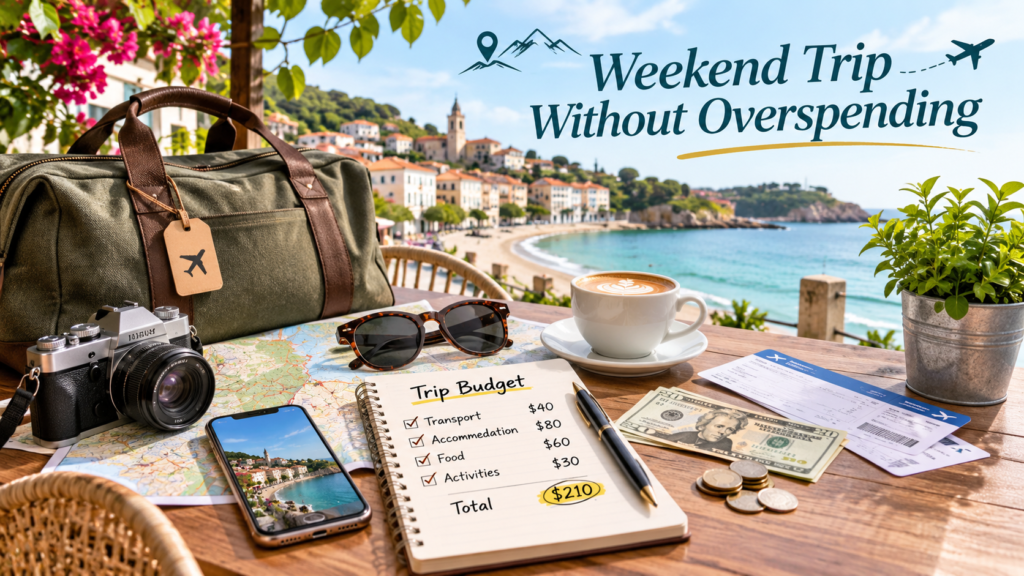
A weekend trip should leave you with good memories, not a credit card bill that follows you for months. The good news is that a short trip does not need a big budget. It needs a simple plan, made before you leave home. Here is how to plan a weekend trip that feels rich and costs much less than most people expect.
1. Pick a Place That Is Close
The biggest cost of a short trip is often getting there. A destination two hours away by bus or train can be just as refreshing as a flight to another country, and it leaves you more money for the trip itself.
Look for a small town, a lake, a hill station, or a city you have never explored properly. When the journey is short, you also get more time at the destination because you are not spending half your weekend in transit.
Choosing somewhere closer to home can also help you avoid expensive flights, airport transfers, and unnecessary travel expenses.
2. Decide Your Total Budget First
Before you book anything, decide one number: the total amount you are willing to spend on the whole weekend. Then split it into four parts, travel, stay, food, and activities.
Write the numbers down. A simple way to do this is to use the same habit you use at home: decide what comes in, decide what goes out, and keep the two in balance.
If you want a clear method, this guide on how to make a monthly budget explains the same idea step by step, and the approach can work just as well for a trip as it does for a month.
Once the numbers are written down, the rest of the planning becomes easier because every choice has a limit.
Example of a Simple Weekend Trip Budget
Here is how a traveler might divide a $300 budget for a two-night weekend getaway:
| Expense | Budget |
|---|---|
| Transportation | $60 |
| Accommodation | $120 |
| Food | $60 |
| Activities | $30 |
| Emergency buffer | $30 |
| Total | $300 |
This is an illustrative budget in US dollars, not an estimate for a specific destination. Actual costs depend on where you travel, accommodation choices, and personal preferences.
Your budget does not need to look exactly like this. The important thing is to decide what you can comfortably afford and plan around that amount.
3. Book Transport Early, and Compare
Transport prices can change depending on demand, travel dates, and availability. Booking ahead can sometimes help you save, but it is worth comparing your options before paying.
Check bus, train, or flight prices once your dates are fixed, and compare two or three options. Sometimes leaving a few hours earlier or later can make a noticeable difference in price.
If you are travelling with friends or family, check whether a shared car costs less than separate tickets. Remember to include fuel, parking, and other travel expenses when comparing costs.
The money you save here is money you can spend on the trip itself.
4. Choose a Simple Place to Stay
You do not need a luxury hotel for two nights. A clean guesthouse, a small homestay, or a well-reviewed budget hotel can be enough, especially if you plan to spend most of your time exploring.
Check recent reviews, not just photos, and confirm what is included. Breakfast, Wi-Fi, parking, taxes, and additional fees can change the real price by a lot.
If you are travelling in a group, a small apartment or a family room often costs less per person than separate rooms.
It is also worth checking the location before booking. A cheaper room far from the attractions you want to visit may end up costing more once transportation is included.
5. Eat Where Local People Eat
Food is one area where travellers can overspend without noticing. Restaurants near famous landmarks sometimes charge more than smaller places a short walk away.
Walk a little further, compare menus, eat where local people eat, and try the street food or small family-run places. You may discover better value, authentic local dishes, and a more memorable dining experience.
Choose places that appear clean, prepare food safely, and have good reviews or a steady flow of customers.
Keep one nice meal for the trip if you enjoy it, but make it a choice, not a habit for every meal.
6. Plan One Paid Activity, and Enjoy the Free Ones
Most places have plenty to enjoy for free: a walk through an old town, a public park, a beach, a viewpoint at sunset, or a local market.
Pick one paid activity that is really worth it, a museum, a boat ride, or a guided walk, and fill the rest of the time with free things.
Check local tourism websites before leaving home. Some museums and attractions offer free admission on certain days, while parks and public events may provide entertainment at little or no cost.
A weekend feels full when it has a mix of both, and your budget stays safe.
7. Track What You Spend Each Day
Take five minutes each evening to add up what you spent that day. If you went over on food, spend a little less on activities the next day.
This small habit can help keep a trip inside its budget.
Cash helps too: keeping a fixed amount of cash for the day makes it easy to see when it is running low. You can also use a budgeting app or a simple note on your phone to track card payments and other expenses.
The goal is not to count every penny obsessively. It is to know where your money is going so that you can enjoy the weekend without worrying about overspending.
8. Keep a Small Emergency Buffer
Set aside a small buffer, about ten percent of your budget, for surprises like a taxi in the rain, a fare increase, or a ticket you did not expect.
A buffer is not extra spending money; it is protection. If you do not use it, it comes home with you.
For trips involving long distances or non-refundable bookings, consider having access to additional emergency funds beyond your planned spending budget.
This way, one unexpected expense does not have to spoil the entire weekend.
A Weekend That Costs Less and Feels Like More
A good weekend trip is not about how much you spend. It is about a change of place, a slower pace, and a few hours that feel different from normal life.
Plan the budget first, keep the destination close, eat simply, and choose one good activity. Leave room for unexpected discoveries, but keep your spending within what you can comfortably afford.
Do that, and you can come home relaxed, with good memories, and your bank balance still looking healthy on Monday morning.
Recommended



Are you a traveler, blogger or writer with a story to share?
You can write for Travelazz to educate and inspire adventurous explorers worldwide.

No Comments